IAM for Agentic AI: 6 Platforms Compared | Pomerium
Compare Pomerium, Aembit, Astrix, Token Security, Oasis, and Britive for securing AI agents and workload identities. See which platform fits your stack.
Compare Pomerium, Aembit, Astrix, Token Security, Oasis, and Britive for securing AI agents and workload identities. See which platform fits your stack.
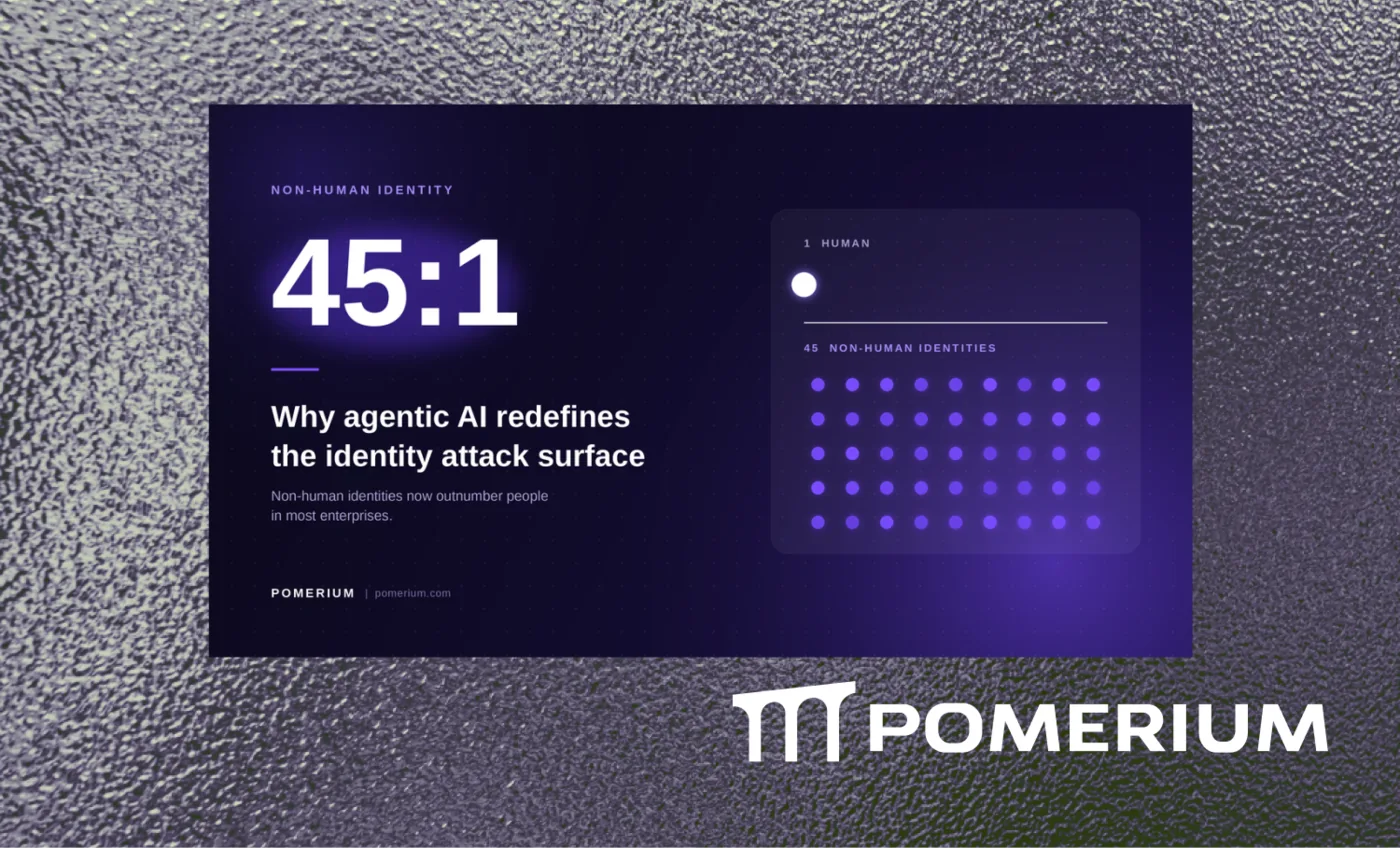
AI agents are now calling production APIs, querying databases, and invoking tools through the Model Context Protocol (MCP) — often with more standing access than any human employee would ever be granted. Identity and access management (IAM) built for humans logging into dashboards was never designed for this.
A new category of platforms has emerged to close the gap, and they take meaningfully different approaches. Some enforce policy in the request path at runtime. Others discover and govern the sprawl of non-human identities (NHIs) you already have. This guide compares six platforms — Pomerium, Aembit, Astrix Security (now part of Cisco), Token Security, Oasis Security, and Britive — so you can match the right architecture to your problem.
This comparison focuses on IAM for agentic AI and workloads specifically: machine-to-machine access, AI agent authorization, MCP security, and non-human identity governance.
IAM for agentic AI is the practice of giving AI agents and workloads verified identities, enforcing least-privilege access policies on every request they make, and auditing every action — so autonomous systems can access tools, APIs, and data without long-lived credentials or standing permissions.
The stakes are not hypothetical. As we’ve previously discussed, reports have found at least 1,862 internet-exposed MCP servers running with zero authentication — every one an open door to whatever tools and data sit behind it.
Before comparing vendors, it helps to understand the split in the category. The six platforms here fall into two broad camps:
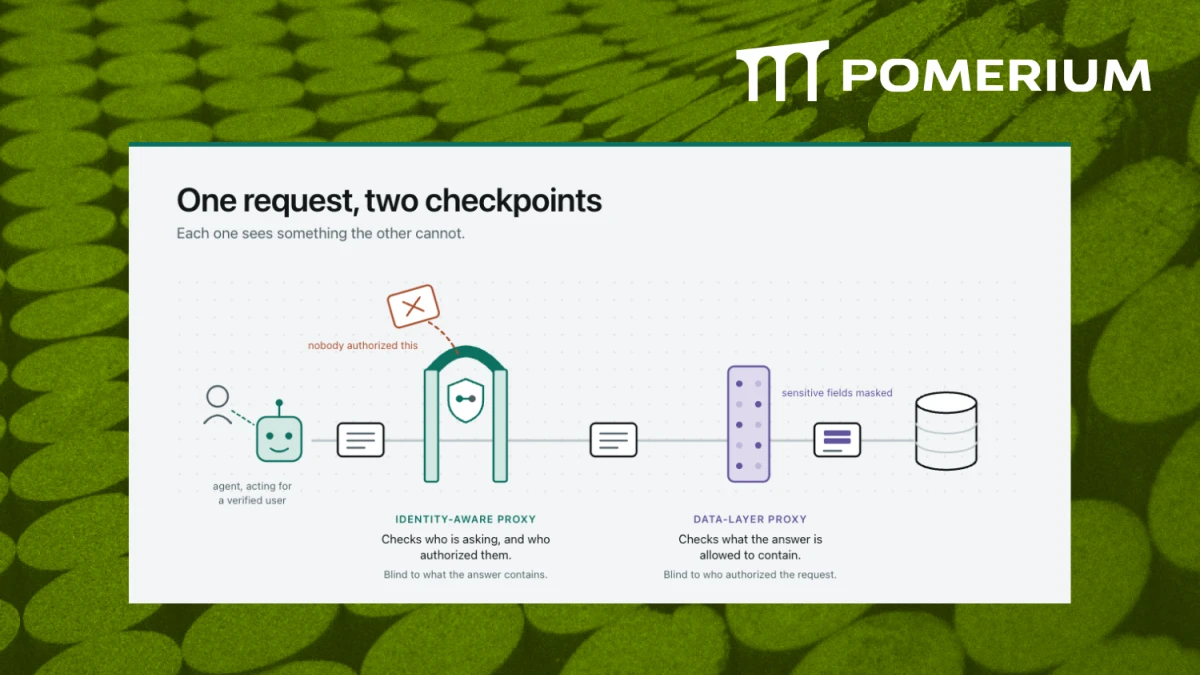
Runtime enforcement platforms sit in the request path. Every time an agent or workload tries to reach a tool, API, or service, the platform authenticates the identity, evaluates policy, and allows or denies the request in real time. Pomerium, Aembit, and Britive work this way.
Discovery and governance platforms work at the inventory and posture layer. They find every service account, API key, secret, and AI agent across your cloud and SaaS estate, flag excessive privileges and anomalies, and manage identity lifecycle. Astrix, Token Security, and Oasis Security lead with this approach.
These are complementary, not interchangeable. A governance platform can tell you an agent is over-permissioned; it generally cannot block that agent's next request. A runtime gateway blocks the request but won't inventory the shadow service accounts it never sees. If your immediate problem is "agents are touching production and nothing is checking each call," you need runtime enforcement. If it's "we have no idea how many NHIs exist," you need discovery first.
| Platform | Category | Runtime enforcement (in request path) | MCP-specific support | NHI discovery & posture | Open source | Best for |
|---|---|---|---|---|---|---|
| Pomerium | Identity-aware agentic gateway | Yes — per-request L7 authorization | Yes — tool-level MCP policies | No (enforcement-focused) | Yes (open-core) | Teams enforcing Zero Trust on humans, services, and agents through one gateway |
| Aembit | Workload IAM | Yes — policy-based credential brokering | Yes — MCP Identity Gateway | Partial | No | Secretless workload-to-workload auth at scale |
| Astrix (Cisco) | NHI security / ITDR | No — posture and detection | Partial (agent discovery) | Yes — core strength | No | Cisco-aligned enterprises needing NHI visibility |
| Token Security | AI agent & NHI security | No — visibility and governance | Partial (agent inventory) | Yes — core strength | No | Security teams inventorying agents across cloud and SaaS |
| Oasis Security | NHI management & agentic governance | Partial — JIT access workflows | Partial (agentic access governance) | Yes — core strength | No | Enterprises governing NHI lifecycle end to end |
| Britive | Cloud PAM for humans, NHIs, and agents | Yes — JIT privilege grants | Yes — runtime MCP request evaluation | Partial | No | Zero standing privileges across multi-cloud |
Pomerium is an open-source, identity-aware gateway that applies the same Zero Trust model to humans, services, and AI agents: every request is authenticated, authorized against policy, and logged for compliance and audibility.
For agentic AI, Pomerium operates as a secure agentic gateway in the network path between agents and the MCP servers or APIs they call. Its MCP support includes what independent gateway comparisons highlight as its standout capability: authorization down to the individual tool and method within an MCP server, evaluated per request against context like user identity, role, and device posture.
Rather than letting agents hold credentials, Pomerium injects short-lived, cryptographically signed identity assertions into requests — so a compromised agent process exposes no reusable secrets. Every agent action ties back to a verified identity, human or machine, with full audit logs. For non-agent workloads, service accounts provide standardized machine-to-machine authentication through the same policy engine.
Pomerium's core is open source, which matters for teams that want to avoid vendor lock-in or inspect the enforcement layer they're placing in front of production. Its limitation is the flip side of its focus: it enforces access; it does not scan your cloud estate to discover shadow NHIs you haven't routed through it.
Best for: engineering and security teams that want one enforcement plane — with per-request, tool-level authorization — for human users, service-to-service traffic, and AI agents, where AI agents never see secrets, credentials or tokens.
Aembit built its platform around workload IAM: replacing hardcoded secrets and vaults with policy-based, just-in-time credential issuance between workloads. In October 2025 it extended this to agents with IAM for Agentic AI.
Two ideas anchor the offering. Blended Identity gives each agent a cryptographically verified identity of its own and, when the agent acts for a person, binds the two into a single traceable credential. The MCP Identity Gateway then brokers agent connections to MCP tools — authenticating the agent, enforcing policy, and performing token exchange so credentials are never exposed to the agent runtime.
Aembit's strength is depth on the workload-to-workload problem: attestation, ephemeral credentials, and a central policy plane that eliminates long-lived secrets in agent configurations. It is a commercial platform without an open-source core, and it centers machine credential brokering more than unified human-plus-machine application access.
Best for: organizations whose primary pain is secrets sprawl across workloads and who want secretless, policy-driven auth extended to AI agents.
Astrix Security pioneered non-human identity security: automatically discovering every service account, token, secret, and AI agent across SaaS, cloud, and on-prem environments, then flagging excessive privileges, risky configurations, and anomalous behavior in real time.
Its AI agent capabilities extend that model — finding shadow and unregistered agents, provisioning agents with short-lived, just-in-time credentials, and detecting compromised agents attempting privilege escalation.
The most important consideration is corporate: Cisco completed its acquisition of Astrix in May 2026, and standalone sales of new Astrix licenses ended June 30, 2026. Astrix's capabilities are being folded into Cisco's security portfolio, so evaluating Astrix now means evaluating Cisco's roadmap.
Best for: enterprises already invested in Cisco's security stack that want NHI discovery and identity threat detection integrated into it.
Token Security positions itself as an AI agent security platform built on three pillars: visibility, control, and governance. It provides continuous discovery of agents and NHIs across cloud environments, SaaS platforms, internal tools, and custom agent frameworks.
Its distinctive angle is intent-based access: rather than only cataloging what credentials an agent holds, Token models what the agent is meant to do and aligns permissions with that purpose, flagging and replacing over-scoped credentials.
Like Astrix, Token is strongest at the visibility and governance layer. It tells you what agents exist, what they can touch, and whether their access matches their intent — but it is not a gateway sitting inline to authorize each tool call.
Best for: security teams that need to inventory and right-size a sprawling population of agents and machine identities before (or alongside) deploying runtime controls.
Oasis Security manages non-human identities from creation to deprovisioning across IaaS, SaaS, PaaS, and on-prem systems.
For agentic AI, Oasis delivers intent-based, just-in-time access with no standing permissions. But it must pair with a policy enforcement layer such as Pomerium in order to extend Zero Trust policies onto agents.
Best for: large enterprises that want full NHI lifecycle governance — provisioning, rotation, deprovisioning, and policy — as their control plane.
Britive approaches the problem from privileged access management. Its cloud-native platform grants just-in-time, temporarily scoped privileges with zero standing privileges (ZSP) — and its agentic AI capabilities hold agents to the same standard as humans and traditional NHIs.
At runtime, every MCP server and tool request from an AI identity is evaluated; approved requests receive short-lived credentials brokered through OAuth/JWT claims, with policies tying agent requests back to human privilege boundaries. Britive also governs agent identities across their lifecycle — registration, tagging, ownership, retirement — in the same platform used for human users.
Britive's center of gravity is privilege elevation in cloud platforms (AWS, Azure, GCP, and SaaS admin planes) rather than application-layer access to internal tools and MCP endpoints broadly. So this works for a limited use case, and not applicable to all potential agentic workloads.
Best for: multi-cloud organizations standardizing on zero standing privileges across human, workload, and agent identities.
Compared with the discovery-and-governance platforms in this guide, Pomerium is the option built to sit inline and decide every request. Aembit and Britive also enforce at runtime, but with different centers of gravity — Aembit on secretless workload credential brokering, Britive on cloud privilege elevation. Pomerium is the one that unifies human, service, and agent access behind a single open-source policy engine with tool-level MCP authorization.
A reasonable decision path:
- You need to control what agents and workloads can do, per request, right now → Pomerium (application/MCP access), Aembit (workload credentials), or Britive (cloud privileges).
- You need to find and govern the NHIs you already have → Oasis Security or Token Security; Astrix if you're standardizing on Cisco.
- You want open source and no vendor lock-in in the enforcement path → Pomerium is the only open-core option in this comparison.
- You're a large enterprise building a full program → pair a governance platform (Oasis, Token) with a runtime gateway (Pomerium) — the categories reinforce each other.
The shift is stark: identity was once something you checked at login, and now — with autonomous agents acting continuously — it has to be something you check on every request. With nearly 2,000 MCP servers already exposed to the internet without any authentication, the cost of treating agent access as an afterthought is measurable and growing.
The six platforms here map to two jobs. Oasis, Token, and Astrix (via Cisco) tell you what non-human identities exist and whether their access is sane. Aembit and Britive broker credentials and privileges just in time. Pomerium puts a single, open-source enforcement plane in front of everything — humans, services, and agents — and authorizes each request against policy, down to the individual MCP tool.
If AI agents are heading toward your production systems, start where the requests are: deploy Pomerium's agentic gateway and put policy between every agent and every tool it calls.
How is Pomerium different from Aembit?
Both enforce policy at runtime, but they solve adjacent problems. Aembit specializes in brokering credentials between workloads so secrets never live in code or agent configs. Pomerium is an access gateway that authorizes every request — from humans, services, or AI agents — at Layer 7, including per-tool MCP policies, through one open-source policy engine. Some organizations run both.
Do I need an NHI discovery tool and a runtime gateway?
Often, yes. Discovery platforms (Astrix, Token, Oasis) inventory and right-size identities; runtime platforms (Pomerium, Aembit, Britive) enforce decisions on live traffic. Governance without enforcement leaves live requests unchecked; enforcement without discovery leaves shadow identities unmanaged. Mature programs layer both.
What is an MCP gateway, and why does tool-level authorization matter?
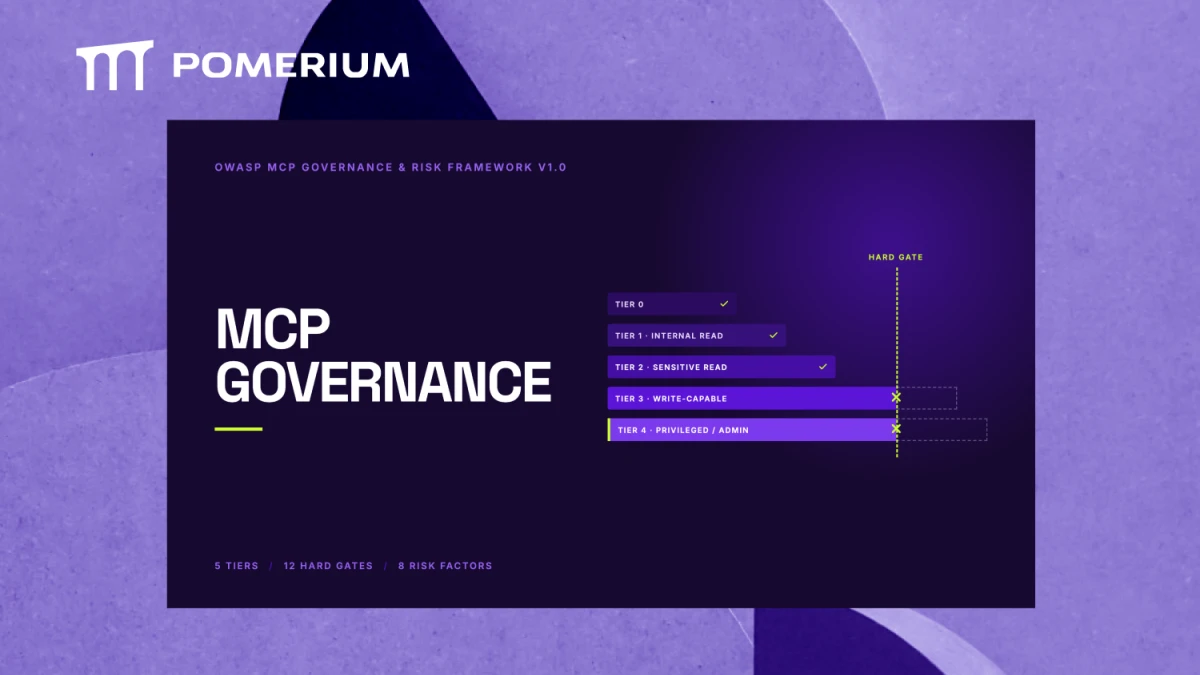
An MCP gateway sits between AI agents and MCP servers, authenticating and authorizing each tool call. Tool-level authorization matters because an MCP server often exposes many tools of very different sensitivity — "read a document" and "delete a database" can live on the same server. Coarse, server-level access grants far more than any single task needs.
Is open source important for agentic AI security?
It's a meaningful differentiator for the enforcement layer specifically. The component that authorizes every production request is a high-trust dependency; open-source cores like Pomerium's let teams inspect the code, self-host, and avoid lock-in. Among the six platforms compared here, Pomerium is the only one with an open-source core.
What happened to Astrix Security?
Cisco acquired Astrix in May 2026 for approximately $400 million, and standalone sales of new Astrix licenses ended June 30, 2026. Its NHI discovery and threat detection capabilities are being integrated into Cisco's security portfolio.