Table of contents
Air-gapped networks are supposed to be impenetrable. No internet connection, no remote attacks. That's the theory at least. But isolation alone doesn't stop the threats that walk through the front door: compromised USB drives, malicious insiders, and supply chain attacks that arrive pre-installed on new hardware.
Zero Trust changes the equation by eliminating implicit trust inside the perimeter. This guide covers how air gaps work, why they fail, and how to implement identity-aware, per-request authorization in environments that can't rely on cloud-based security tools. Skip to the bottom to see the 5 steps to achieving Zero Trust in an air-gapped environment.
What is an air-gapped network
Securing air-gapped environments involves physically isolating critical systems from unsecured networks and the internet to prevent cyberattacks and data breaches. An air-gapped network is a computer system with no direct connection to external networks—no ethernet cables, no Wi-Fi, no Bluetooth. The logic is straightforward: if attackers can't reach your systems remotely, they can't compromise them remotely.
But physical isolation does not equal complete security. Once someone is inside an air-gapped environment, traditional perimeter defenses offer little protection.
This creates gaps that organizations often overlook:
- Authorized users can become threats: Malicious insiders or compromised credentials operate freely once inside, with insider breaches costing an average of $4.92 million
- Removable media bypasses isolation: USB drives introduce malware without any network connection, and 51% of malware now targets USB devices
- No visibility into internal activity: Most air gap strategies assume trusted behavior and lack monitoring, even though 93% of security leaders say insider threats are as difficult or harder to detect than external attacks
- Static credentials persist indefinitely: Shared passwords create permanent access even after personnel changes
Types of air gap isolation
Air gaps exist on a spectrum, from complete physical separation to software-enforced boundaries. Each type offers different tradeoffs between security and operational flexibility.
Physical isolation
In a physically isolated environment, hardware has no network interface cards or connections to external systems. Data moves only through removable media under strict procedures. You'll find this approach in classified military networks and high-security government facilities. It offers the highest security but creates significant operational friction.
Operational isolation
Here, network infrastructure exists, but strict policies govern what data enters or exits. Organizations rely on human procedures and manual data transfers to maintain separation. This approach is common in industrial environments where some connectivity is necessary for operations.
Electronic isolation
Electronic isolation uses hardware-enforced controls like data diodes—devices that permit one-way data flow only. Information can flow out for monitoring, but nothing can flow back in. This prevents bidirectional communication while still allowing some operational visibility.
Logical isolation
Software-defined boundaries separate network segments in logically isolated environments. This approach offers the most flexibility but requires robust access controls to maintain effective separation. Without proper identity verification, logical boundaries can be bypassed by anyone with network access.
| Isolation Type | External Connection | Data Transfer Method | Flexibility |
|---|---|---|---|
| Physical | None | Removable media only | Lowest |
| Operational | Restricted | Manual with procedures | Low |
| Electronic | One-way via data diodes | Hardware-controlled | Medium |
| Logical | Software-controlled | Policy-enforced | Highest |
Industries that rely on airgapped environments
Certain sectors require isolation due to regulatory mandates, national security requirements, or the sensitivity of the data they handle.
Defense and intelligence
Classified networks like SIPRNet and JWICS remain isolated from the public internet by mandate. Government security frameworks require this separation to protect national security information.
Critical infrastructure and energy
SCADA systems and operational technology controlling power grids, water treatment facilities, and pipelines use air gaps to prevent remote sabotage. A compromised industrial control system can have physical consequences far beyond data loss.
Healthcare and life sciences
Medical devices, research data, and patient records in isolated lab environments require protection under regulations like HIPAA. Research facilities handling sensitive intellectual property often maintain air-gapped systems for their most valuable work.
Financial services
Trading systems, transaction processing platforms, and sensitive financial data frequently operate in isolated environments. The potential impact of a breach—both financial and reputational—justifies the operational overhead.
Why air gaps alone do not guarantee security
Air gaps prevent network-based attacks effectively. But isolation does not stop threats that originate inside the perimeter or arrive through authorized channels.
Consider what happens once someone gains physical access: they're inside a trusted environment with few controls. The 2010 Stuxnet attack demonstrated this vulnerability—malware reached air-gapped Iranian nuclear facilities via infected USB drives, causing physical damage to centrifuges.
The fundamental problem is that air gaps create a binary trust model: outside is untrusted, inside is trusted. This assumption fails when contractors bring compromised devices, supply chain attacks pre-compromise hardware before deployment, disgruntled employees decide to exfiltrate data, or social engineering tricks authorized users into unsafe actions.
Common attack vectors against airgapped systems
Understanding how attackers breach isolated environments helps explain why additional controls are necessary.
Removable media and supply chain compromises
The "sneakernet"—transferring data via physical media—is the most common attack vector. Infected USB drives, compromised firmware, and pre-loaded malware on new hardware all bypass network isolation entirely. Attackers target the data transfer process because it's often the weakest link.
Insider threats and social engineering
Authorized personnel with legitimate access can exfiltrate data or introduce malware intentionally or accidentally. Social engineering tricks users into unsafe actions—plugging in a found USB drive, for example, or bypassing security procedures under time pressure.
Covert channels and side-channel attacks
Advanced attackers use unconventional methods to extract data without network connections. Electromagnetic emissions, acoustic signals, power fluctuations, and even blinking LED lights have all been demonstrated as data exfiltration channels. While these attacks require sophistication, they've been documented in real-world scenarios.
What is Zero Trust for air-gapped networks
Traditional air gap security assumes everything inside the perimeter is trusted. Zero Trust eliminates this assumption by verifying every request, regardless of where it originates.
In this model:
- Every request is authenticated: No action proceeds without verified identity
- Every request is authorized: Policy determines whether the specific action is permitted
- Context informs decisions: Time, device, location, and behavior factor into access decisions
- Trust is never permanent: Sessions and permissions are continuously validated
Zero Trust doesn't replace air gaps—it complements them. The air gap prevents remote attacks, while Zero Trust prevents insider threats and lateral movement once someone is inside.
Essential access controls for airgapped environments
Making Zero Trust operational in isolated networks requires specific capabilities. Each control addresses a different aspect of the trust problem.
Per-request authorization
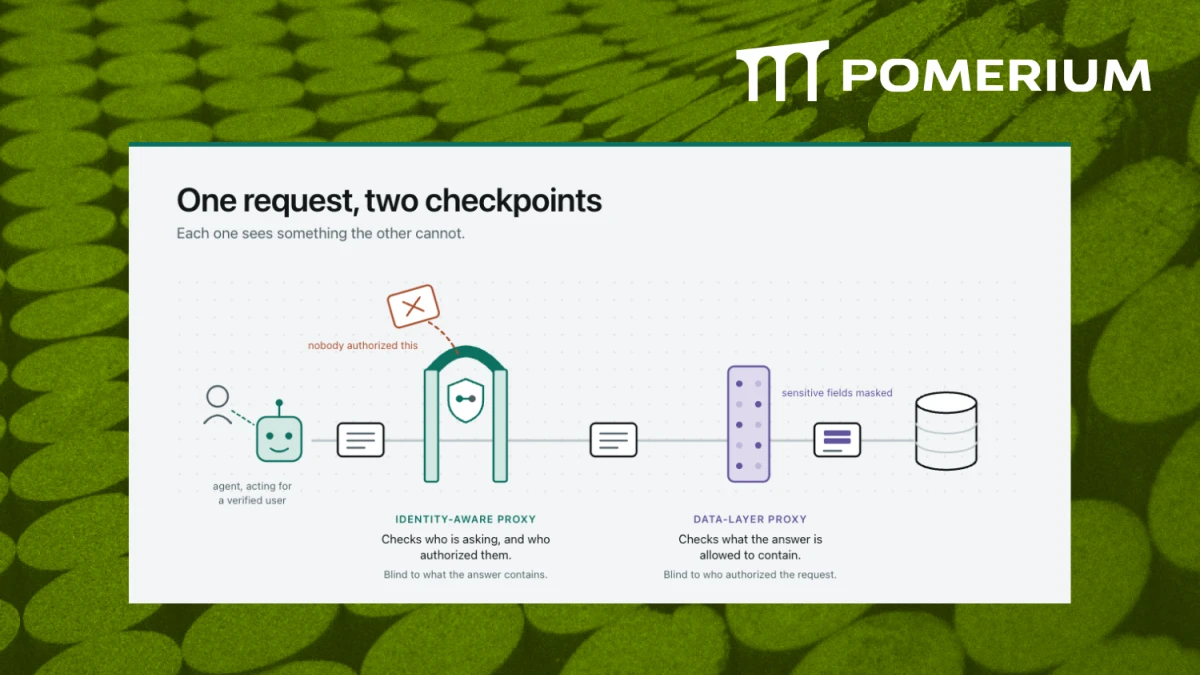
Per-request authorization evaluates every individual action against policy, not just the initial login. This prevents lateral movement after authentication—even if credentials are compromised, attackers can only access what those credentials are explicitly authorized for at that moment. This approach differs fundamentally from session-based access, where a single authentication grants broad access until the session expires.
Identity-aware authentication
Every user, service, and automated process requires a verified identity. Anonymous or shared accounts create accountability gaps that attackers exploit. Integration with identity-aware providers that work offline or in isolated deployments makes this practical even without internet connectivity.
Context-aware policy enforcement
Policies can incorporate signals beyond identity: device posture, time of day, source location, and request type. This enables fine-grained access decisions like "this engineer can access this system only during maintenance windows from approved workstations."
Continuous session validation
Sessions are not permanent grants of access. Access is re-evaluated throughout the session based on changing context. If a device falls out of compliance or a user's role changes, access is revoked immediately—not at the next login.
Comprehensive audit logging
Every access decision is logged with full context: who, what, when, from where, and why access was granted or denied. This audit trail is essential for compliance and incident investigation. In air-gapped environments, logs remain inside the perimeter, maintaining data sovereignty.
Best practices for Zero Trust in air-gapped deployments
Implementing Zero Trust in isolated environments requires adapting the model to work without external dependencies.
1. Eliminate static credentials and shared secrets
Replace long-lived passwords and API keys with short-lived tokens and federated identities. Credentials that expire cannot be reused by attackers who obtain them. This is particularly important in air-gapped environments where credential rotation is often neglected due to operational complexity.
2. Enforce least-privilege access by default
Grant only the minimum permissions required for each task. Default deny everything, explicitly allow only what is necessary. This limits the blast radius when credentials are compromised.
3. Implement real-time monitoring and alerts
Deploy monitoring that operates entirely within the isolated environment. Alert on anomalous behavior even without external network connectivity. Pattern detection can identify insider threats that would otherwise go unnoticed.
4. Maintain detailed access logs for compliance
Logs capture every access decision with sufficient detail to satisfy auditors. Self-hosted logging ensures data remains inside the air gap while still providing the visibility needed for security operations and compliance reporting.
5. Deploy self-hosted control planes
Access control infrastructure operates entirely within the isolated environment. Cloud-dependent solutions cannot function in true air gaps, making self-hosted deployment essential for maintaining both security and operational capability.
Why self-hosted deployment matters for air-gapped Zero Trust
Cloud-based access solutions require internet connectivity by design—which defeats the purpose of air gap isolation. Self-hosted solutions address this fundamental constraint.
- Data sovereignty: All traffic and logs remain inside the isolated environment
- Independent operation: No external dependencies for authentication or policy decisions
- Compliance alignment: Auditors can verify that no data leaves the perimeter
- Reduced latency: Local deployment eliminates round-trips to external services
Pomerium Enterprise is built for self-hosted Zero Trust, enabling organizations to enforce per-request authorization across humans, services, and AI agents without external dependencies. The entire control plane—policies, identity verification, and audit logs—operates within your environment.
Ready to implement Zero Trust in your air-gapped environment? Try Pomerium to see how self-hosted, per-request authorization works in practice.
FAQs about securing airgapped environments
Can Zero Trust principles work without internet connectivity?
Yes, Zero Trust is an architecture pattern, not a cloud service. Self-hosted identity providers and policy engines operate entirely within isolated networks to enforce per-request authorization without external connectivity.
How do organizations rotate credentials in fully isolated environments?
Automated credential rotation uses internal certificate authorities and identity federation that operate within the air gap. Short-lived tokens replace static secrets, eliminating the need for manual password changes while maintaining security.
What is the difference between logical and physical air gaps?
Physical air gaps have no network connections whatsoever, while logical air gaps use software-defined boundaries to isolate segments. Logical air gaps offer more flexibility but require robust access controls to maintain effective separation.
How do you authenticate services in air-gapped Kubernetes clusters?
Workload identity and service account tokens issued by internal identity providers authenticate services without external dependencies. Policy engines validate identities at the ingress layer for every request, ensuring that service-to-service communication follows the same Zero Trust principles as human access.