Table of contents
Kubernetes clusters are dynamic, distributed, and often ephemeral—which makes them difficult to secure with traditional tools. Firewalls and network segmentation protect the perimeter, but they cannot see inside the cluster or answer whether a request is authorized.
Securing Kubernetes requires tools that understand orchestration, integrate with DevOps workflows, and automate policy enforcement across the entire container lifecycle. This guide covers ten tools across five categories: configuration scanning, vulnerability scanning, runtime security, policy enforcement, and access control.
Why DevOps Teams Need Kubernetes Security Tools
Kubernetes security tools scan for vulnerabilities, enforce policies, detect runtime threats, and manage compliance across the entire container lifecycle. Popular open-source options include Falco for runtime detection, Trivy for scanning and SBOMs, Kubescape for misconfiguration and compliance, Checkov for IaC scanning, and Calico for network policy.
Kubernetes makes deployment and scaling fast. But speed does not equal security—67% of companies have delayed deployments due to Kubernetes security issues. Firewalls protect the perimeter, yet they cannot see inside the cluster. Network segmentation controls traffic flow, though it cannot answer who is making a request or whether that person is still authorized.
Traditional security tools were built for static infrastructure. Kubernetes environments are dynamic—pods spin up and down, services communicate across namespaces, and workloads shift between nodes. Security tooling for Kubernetes understands orchestration, integrates with DevOps workflows, and automates policy enforcement in ways that perimeter defenses simply cannot.
Open Source Kubernetes Configuration Scanning Tools
Configuration scanning tools analyze manifests, Helm charts, and cluster settings against security benchmarks before deployment. This "shift-left" approach catches problems early, when fixing them is cheapest—essential since misconfigurations remain the leading cause of Kubernetes security incidents. Unlike vulnerability scanning, which checks what's inside an image, configuration scanning checks how resources are set up.
Checkov
Checkov is an open-source Infrastructure as Code scanner that analyzes YAML, Helm, and Terraform files. It catches misconfigurations in code before they reach the cluster and plugs directly into CI/CD pipelines.
The tool includes hundreds of built-in policies covering Kubernetes, AWS, Azure, and GCP. You can also write custom policies in Python or YAML. Checkov's output includes remediation guidance, which helps teams fix issues without deep security expertise.
Kube-Bench
Kube-Bench checks clusters against the CIS Kubernetes Benchmark, a set of security best practices maintained by the Center for Internet Security. It runs as a job inside the cluster to assess configuration against these standards.
Many organizations reference CIS benchmarks in their security policies, and kube-bench provides automated evidence of compliance. The output clearly identifies which checks passed, failed, or require manual verification.
KubeLinter
KubeLinter is a lightweight static analysis tool for Kubernetes YAML and Helm charts. It focuses on security and production-readiness checks, catching issues like containers running as root, missing resource limits, and writable root filesystems.
The tool is fast enough to run on every commit and integrates with GitHub Actions, GitLab CI, and other pipeline tools. KubeLinter's checks are opinionated but configurable—you can disable rules that don't apply to your environment.
Kubernetes Vulnerability Scanning Tools
Vulnerability scanning tools detect known Common Vulnerabilities and Exposures (CVEs) in container images, dependencies, and running workloads—critical since 87% of container images were found to include a high or critical vulnerability. They also generate Software Bill of Materials (SBOMs), which provide transparency into what's actually inside your containers.
Configuration scanning checks how something is set up. Vulnerability scanning checks what it contains. Both are necessary for comprehensive security.
Trivy
Trivy is a widely adopted, all-in-one open-source scanner for images, filesystems, IaC, and clusters. It detects vulnerabilities, secrets, and misconfigurations in a single tool.
What makes Trivy stand out is its breadth—it scans container images, Git repositories, Kubernetes clusters, and Infrastructure as Code files. It can generate SBOMs in multiple formats, which helps with supply chain security requirements. Trivy also runs without requiring a database server; it downloads vulnerability data automatically.
Grype
Grype is Anchore's open-source vulnerability scanner for container images. It's fast, integrates with CI/CD pipelines, and pairs with its companion tool Syft for SBOM generation.
Grype focuses specifically on vulnerability scanning rather than trying to do everything. This makes it simpler to understand and operate. The tool supports multiple output formats and can fail builds when vulnerabilities exceed a severity threshold.
Kubernetes Runtime Security Tools
Runtime security tools monitor live workloads and detect threats during execution, not just at build time. Scanning catches known issues, but runtime detection is crucial for catching zero-day exploits and anomalous behavior that signatures cannot identify.
Many runtime tools use eBPF (extended Berkeley Packet Filter), a technology that provides deep, kernel-level visibility without requiring kernel modules or application changes.
Falco
Falco is a CNCF project for runtime threat detection. It uses eBPF to monitor system calls and detects suspicious activity like privilege escalation, cryptomining, and unexpected shell access in containers.
Falco works by comparing observed behavior against rules. When a container does something unexpected—spawning a shell, reading sensitive files, or making unusual network connections—Falco generates an alert. You can use the default rules or write custom ones for your environment.
Kubescape
Kubescape combines misconfiguration scanning with runtime security. It checks clusters against NSA/CISA and CIS benchmarks, offers remediation guidance, and can run as a CLI tool or in-cluster for continuous monitoring.
The tool provides a risk score that helps prioritize remediation efforts. Kubescape also integrates with CI/CD pipelines, so you can catch issues before deployment and monitor for drift afterward.
Kubernetes Policy Enforcement Tools
Policy enforcement tools block non-compliant workloads from ever being deployed. They work by leveraging Kubernetes admission controllers, which intercept requests to the API server before resources are created.
Scanning tells you what's wrong. Policy enforcement prevents wrong things from happening in the first place.
Open Policy Agent
Open Policy Agent (OPA) is a general-purpose policy engine that uses the Rego language. Gatekeeper is its Kubernetes-native implementation, which enforces custom policies at admission.
OPA is highly flexible—you can write policies for almost any use case. However, Rego has a steep learning curve. Teams often start with pre-built policy libraries and gradually customize them. The investment pays off in environments with complex policy requirements.
Kyverno
Kyverno is a Kubernetes-native policy engine that uses YAML instead of a custom language. This makes it easier to adopt than OPA because teams don't have to learn Rego.
Kyverno can validate, mutate, and generate resources. For example, it can automatically add labels to pods, inject sidecars, or create network policies when namespaces are created. This makes it useful for both security enforcement and operational automation.
Kubernetes Network Policy and Access Control Tools
While scanning and runtime detection address workload security, network segmentation and identity-based access control are equally critical. Network policy and access control tools determine who and what can communicate within and into the cluster.
Traditional network security assumes that traffic inside the perimeter is trusted. Zero Trust principles flip this assumption: never trust, always verify, and enforce per-request authorization regardless of network location.
Calico
Calico is a network policy engine that enables fine-grained, pod-to-pod traffic control. It implements the standard Kubernetes NetworkPolicy API and extends it with additional capabilities.
With Calico, you can define which pods can communicate with each other based on labels, namespaces, and other attributes. This microsegmentation limits the blast radius of a compromised workload—an attacker who gains access to one pod cannot automatically reach others.
Pomerium
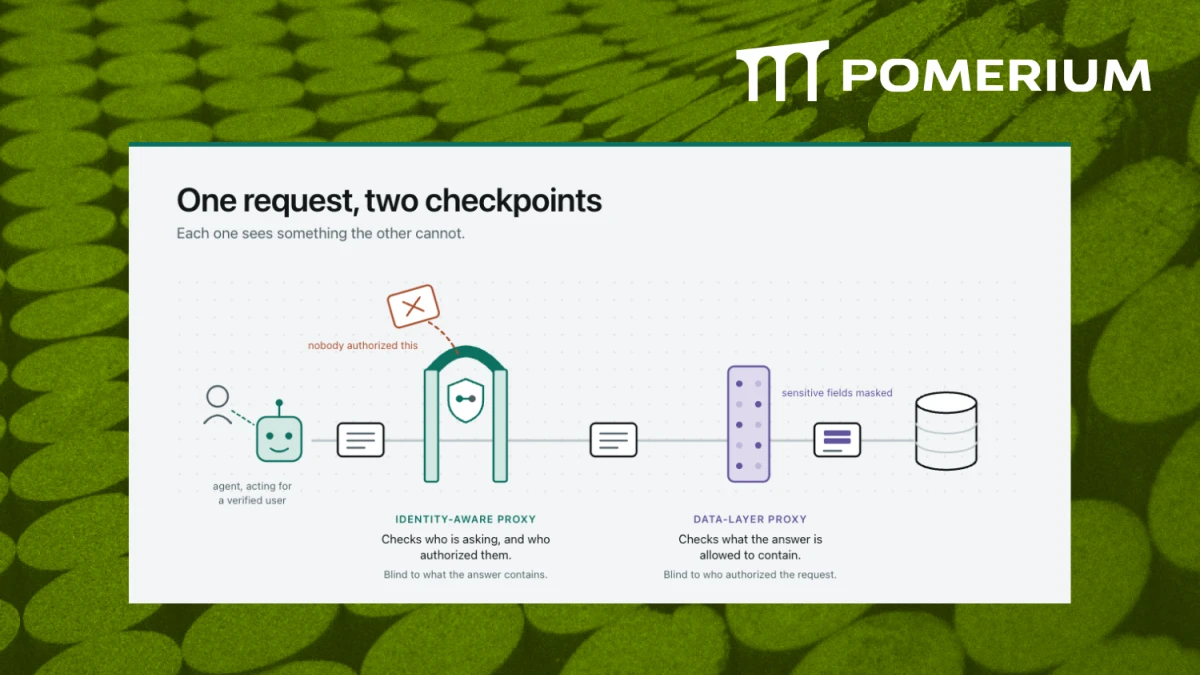
Pomerium is a Zero Trust access layer for the Kubernetes API, ingress, and internal services. It enforces per-request authorization based on identity, device, and context rather than network location.
Unlike network policies that control pod-to-pod traffic, Pomerium controls who can access services in the first place. It works as a reverse proxy requiring no client installation, provides audit logging for every access decision, and unifies human, service, and agent access under one policy model.
| Capability | Network Policies | Identity-Aware Access |
|---|---|---|
| Controls | Pod-to-pod traffic | User and service access |
| Based on | Labels, namespaces | Identity, device, context |
| Visibility | Network flows | Who accessed what, when |
| Use case | Microsegmentation | Zero Trust access |
Teleport
Teleport provides identity-aware access for Kubernetes clusters, SSH, and databases. It offers session recording and detailed audit trails for compliance requirements.
Teleport requires a client installation on end-user machines, which provides additional capabilities like session recording but adds deployment complexity. It's well-suited for environments where detailed session auditing is a primary requirement, but comes with a pricing model based on the number of servers and amount of infrastructure protected.
How to Choose the Right Kubernetes Security Tool
No single tool covers every security requirement. The right choice depends on your specific needs, existing toolchain, and team expertise.
Consider the following factors when evaluating tools:
- Coverage needs: What phase of the lifecycle are you securing—build, deploy, or runtime?
- Integration requirements: Does it fit your CI/CD pipeline and existing toolchain?
- Compliance mandates: Do you require CIS, NIST, or PCI benchmark reporting?
- Team expertise: Are you comfortable with YAML-based tools or custom policy languages like Rego?
- Deployment model: Do you prefer SaaS, self-hosted, or a hybrid approach?
| Category | Best For | Example Tools |
|---|---|---|
| Configuration scanning | Catching misconfigs before deploy | Checkov, Kube-Bench, KubeLinter |
| Vulnerability scanning | Finding CVEs in images | Trivy, Grype |
| Runtime security | Detecting live threats | Falco, Kubescape |
| Policy enforcement | Blocking non-compliant deploys | OPA/Gatekeeper, Kyverno |
| Network and access control | Segmentation and Zero Trust | Calico, Pomerium |
Building a Reliable Kubernetes Security Platform
A mature security stack includes tools that complement each other across the entire software development lifecycle. Relying on a single tool leaves gaps that attackers can exploit.
- Pre-deployment: IaC scanning and image vulnerability scanning catch issues before code reaches the cluster. Tools like Checkov and Trivy integrate into CI/CD pipelines to fail builds when security thresholds aren't met.
- Admission: Policy enforcement at the API server prevents non-compliant workloads from being created. OPA/Gatekeeper or Kyverno can block deployments that violate organizational policies.
- Runtime: Threat detection and network policies monitor live workloads. Falco detects anomalous behavior while Calico limits lateral movement.
- Access: Identity-based, per-request authorization with audit logging controls who can reach services. This layer is often overlooked but increasingly important as teams adopt Zero Trust principles.
For organizations that want identity-aware access control with full audit trails across Kubernetes, internal services, and APIs, Pomerium provides a unified policy model for humans, services, and agents. Try Pomerium.
FAQs about Kubernetes Security Tools
What are the four Cs of Kubernetes security?
The four Cs are Cloud, Cluster, Container, and Code. Each layer requires distinct security controls, and vulnerabilities at any layer can compromise the others. Cloud security covers the underlying infrastructure, cluster security addresses Kubernetes configuration, container security focuses on images and runtime, and code security deals with application vulnerabilities.
How often should Kubernetes clusters be scanned for vulnerabilities?
Continuous scanning in CI/CD pipelines catches issues before deployment. Scheduled in-cluster scans—typically daily or weekly—detect configuration drift and newly disclosed CVEs in running workloads. The right frequency depends on your risk tolerance and compliance requirements.
Can multiple Kubernetes security tools be used together?
Yes, layering tools across categories provides defense in depth. No single tool addresses all attack vectors. Most organizations use a combination of scanning, runtime detection, policy enforcement, and access control tools. The key is ensuring they integrate well and don't create alert fatigue.
What is the difference between container image scanning and runtime security?
Image scanning detects known vulnerabilities in static artifacts before deployment. It answers the question "what's in this container?" Runtime security monitors live container behavior to catch exploitation attempts and anomalies in real time. It answers "what is this container doing?" Both are necessary because attackers can exploit zero-day vulnerabilities that scanners don't yet know about.
How do Kubernetes security tools integrate with CI/CD pipelines?
Most scanning and policy tools offer CLI interfaces and container images that run as stages in a pipeline. They typically exit with a non-zero status code when security thresholds aren't met, which fails the build. Common integration points include pre-commit hooks, pull request checks, and deployment gates.